


 MarketWatch Logo PNG
The MarketWatch logo symbolizes accessibility and professionalism, reflecting the platform’s primary goal of bringing together news, analysis, and market data in a single, convenient source. The platform quickly earned a reputation as one of the key resources for economic news.
MarketWatch was founded in 1997 as a joint venture between Data Broadcasting Corporation and CBS News. Ted Weisberg, Bill Bishop, and Larry Kramer developed it as a real-time financial news website. In 1999, the company completed an IPO on NASDAQ, and its shares rose 474 percent on the first day of trading during the dot-com boom.
The platform expanded in the early 2000s. It acquired Hulbert Financial Digest in 2003, adding research on investment newsletters, and introduced stronger real-time market tracking and stock analysis tools in 2004. Dow Jones & Company bought MarketWatch for $528 million in 2005, then integrated its reporting and financial data resources.
News Corporation acquired Dow Jones in 2007, bringing MarketWatch into a larger media group. From 2008 to 2010, the service launched mobile applications, redesigned its website, and expanded on social networks. Interactive market tools, podcasts, and regular video reports followed from 2011 to 2013, while international market coverage grew in 2014 and 2015.
From 2016 to 2018, MarketWatch introduced more personalized content based on reader interests. New tools for cryptocurrencies and alternative investments appeared in 2019 and 2020. During 2021 and 2022, the company continued updating its technology and services for individual investors. By 2023, it had evolved from an early financial website into a broad source of market news, data, commentary, and investment analysis across digital channels worldwide.
Meaning and History
What is MarketWatch?
This platform makes financial news and market data accessible and understandable for everyone. It offers up-to-date coverage of business events, personal finance, and stock markets. Users can find real-time market analysis and convenient tools for tracking stocks, managing portfolios, and working with cryptocurrencies. The approach caters to both experienced investors and beginners, helping them navigate complex financial topics and make informed decisions. The platform provides stock quotes, economic calendars, and resources for long-term planning.
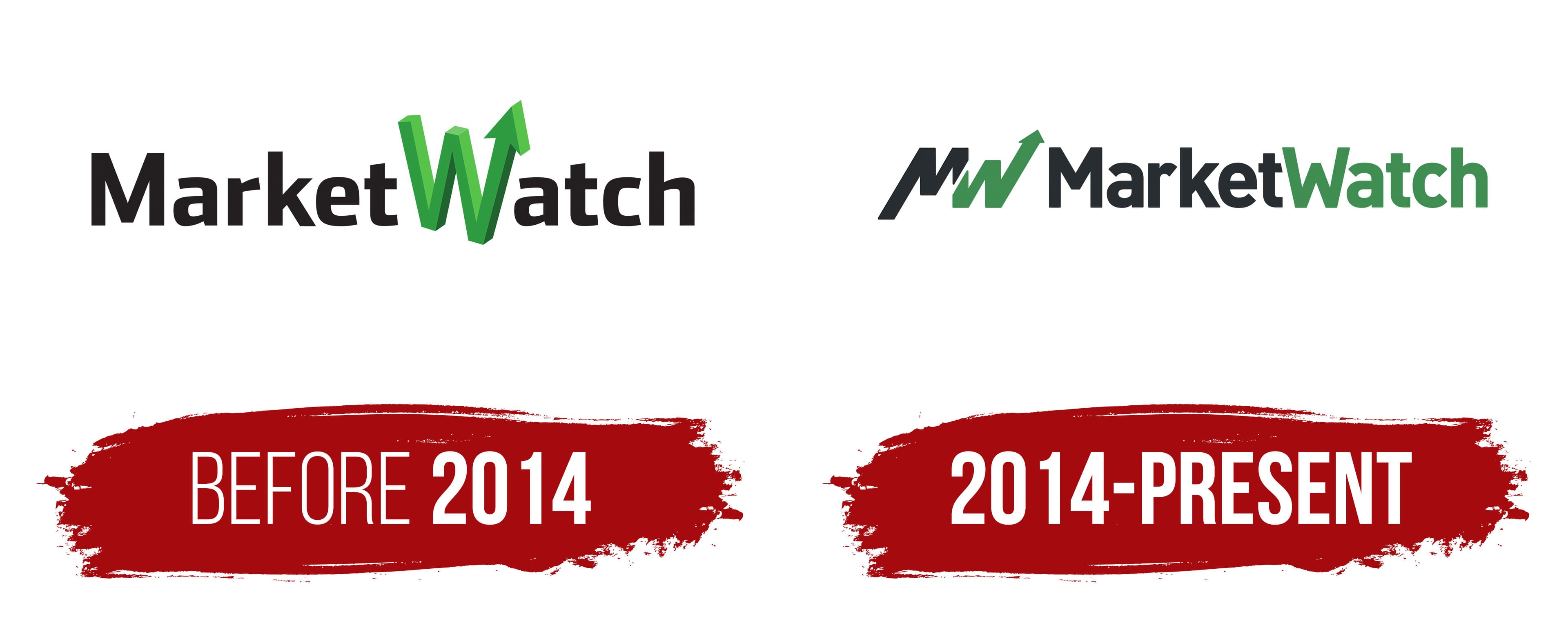
Before 2014

MarketWatch is a financial news portal that helps users follow global economic events. Its logo is associated with professionalism and analytics. The modern version emphasizes the resource’s development and growth, covering market trends and financial indicators.
The emblem includes text and a graphic symbol. The title is in a sans-serif font. The color black symbolizes reliability and seriousness inherent in the financial sphere. Bold fonts with straight lines bring stability.
The graphic emphasizes the letter “W,” highlighted in green and complemented by an upward-pointing arrow. The arrow symbolizes moving forward, growth, and success. The green color evokes finance, investment, and stability, strengthening its connection to the portal’s theme.
The name emphasizes the company’s mission – to follow market changes. “Market” focuses on financial data, while “Watch” emphasizes constant monitoring. The combination of words accurately conveys the essence of the resource – to help users keep abreast of economic changes.
The portal was launched in 1997 as a platform for covering market news and analytics. During his work, he has become one of the leading sources of information in his field, providing fresh data, high-quality analysis, and convenient tools for working with finance. The logo has changed over time, reflecting the development and current trends.
2014 – today

In 2014, MarketWatch updated its logo to emphasize the company’s development and progress. The new design features a two-tone style and a graphic symbol “MW” made up of the first letters of the name, linking the brand even more closely to the financial markets.
The text is set in a font specifically designed for this, according to the company. It looks like the Urbanist 800italic or the ITC Avant Garde Gothic Paneuropean Bold Oblique. The inscription “MarketWatch” looks strict and professional. The word “Market” is black, and the word “Watch” is green. Clear font lines and a slight slant create a sense of movement and dynamism, reflecting market changes.
The graphic symbol “MW” has been included in the update. A green upward-pointing arrow appeared in the letter “W.” The arrow symbolizes growth, progress, and success, reflecting the goals of the platform’s users. It visually resembles charts and market trends. The black letter “M” adds harmony and emphasizes stability.
The contrast of black and green colors makes the logo expressive. The two-tone design enhances visual appeal and emphasizes a commitment to precision and development in the financial sector. The updated visual appearance is modern, dynamic, and easy to understand.