 Ozzy Osbourne Logo PNG
The Ozzy Osbourne logo vividly marks the musician’s journey, turning his art into a cult phenomenon. Music became his way of escaping the monotony of everyday life and creating something unparalleled, which continues to resonate in the hearts of millions of rock and roll fans.
Ozzy Osbourne was born John Osbourne on December 3, 1948, in Aston, Birmingham. Inspired by The Beatles as a teenager, he performed with local groups and joined Rare Breed in 1968. In 1969, he formed Black Sabbath with Tony Iommi, Geezer Butler, and Bill Ward. Their 1970 debut helped define heavy metal, followed by Paranoid, Master of Reality, and Vol. 4.
From 1970 to 1978, the group released eight albums before Osbourne was dismissed in 1979 amid addiction problems and internal tension. His solo career began with Blizzard of Ozz in 1980, featuring guitarist Randy Rhoads and “Crazy Train.” Rhoads died in a plane crash in 1982. Diary of a Madman, Bark at the Moon, and No Rest for the Wicked followed during the decade, while Sharon Arden became his manager and later his wife.
No More Tears arrived in 1991 and Ozzmosis in 1995. In 1997, he launched Ozzfest, giving established and newer metal acts a major touring platform. MTV’s The Osbournes, broadcast from 2002 to 2005, introduced his family life to a wider audience. Down to Earth appeared in 2001, followed by Black Rain in 2007 and Scream in 2010.
Osbourne reunited with his former band for 13 in 2013, followed by a farewell tour that ended in 2017. Health problems affected later years, but he released Ordinary Man in 2020 and Patient Number 9 in 2022. By 2023, his combined group and solo career had produced more than 100 million record sales, numerous awards, and decades of touring across major international venues.
Meaning and History
What is Ozzy Osbourne?
This artist has become a symbol of rock music and heavy metal. His unique voice and energetic performances have made him an iconic figure. Powerful vocals, dark imagery, and charismatic stage presence earned him the nickname “Prince of Darkness.” He created unforgettable hits such as “Crazy Train” and “Bark at the Moon,” which have become genre classics. The performer’s music, vibrant personality, and unpredictable antics won fans’ hearts. He collaborated with renowned guitarists such as Randy Rhoads and Zakk Wylde, cementing his place in rock and roll history as one of its key legends.
1980 – today
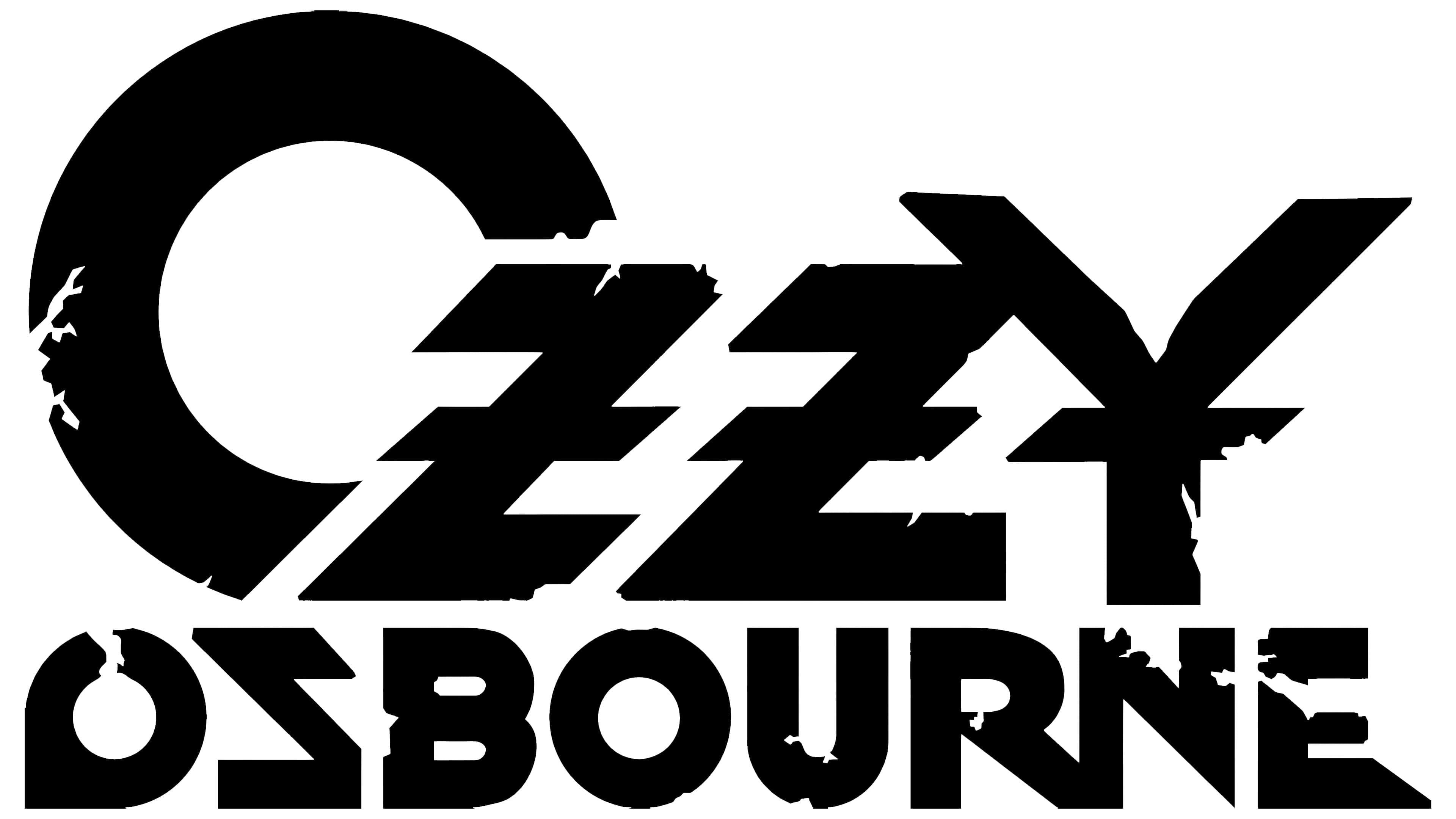
Ozzy Osbourne’s logo captures the energy, darkness, and chaos he represents as an artist. The design symbolizes his solo career and a deep connection to rock and metal culture, where his name has long been iconic.
The logo’s top text is the large word “Ozzy,” and below it is “Osbourne.” The capital letter “O” in “Ozzy” stands out for its oversized, jerky style, adding gruffness and energy to the design. The rest of the letters support the overall style: angular shapes with “breaks” create tension and convey strength.
The text “Osbourne” below is more compact but retains the same rough font. The letters’ tears and roughness strengthen the association with chaos and anarchy, emphasizing Ozzy’s image. All this vividly expresses the energy inherent in heavy music.
The rich black logo emphasizes its drama and connection with rock culture. The color blends with the atmosphere created by Osbourne’s music. Although the logo sometimes adapts to other colors, classic black has remained the most distinctive option.
The ragged lines in the letters reflect the spirit of Ozzy’s music, his rebelliousness, and his desire to break the usual patterns. The design vividly expressed a rebellious mood and has always been central to his work.
The logo appeared at the beginning of Ozzy’s solo career after leaving Black Sabbath. It has become a symbol of his brand, conveying the energy of his performances and the uniqueness of his style, which helps Ozzy Osbourne remain an iconic figure in the rock world.