


 TRON Logo PNG
The TRON logo stands out as the visual mark of a platform designed to enable the free exchange of digital content. The project has opened new opportunities for user interaction in the entertainment sphere, providing tools for collaborative creation and distribution of materials. The idea of decentralization became its foundation, attracting numerous participants and shaping a unique space for creativity.
Justin Sun founded TRON in Singapore in 2017 as a platform for decentralized digital content distribution. Its September 2017 initial coin offering raised about $70 million, and TRX was first issued as an ERC-20 token on Ethereum. Interest in the token rose sharply in December, while the team began building its own blockchain and preparing a move away from its original technical base.
A test network launched in March 2018, followed by the mainnet in May and the migration of TRX to the new chain. In July, TRON acquired BitTorrent for $140 million, adding a large existing user base to the project. The TRON Virtual Machine arrived in October, giving developers tools to build decentralized applications on the network.
The BitTorrent token, BTT, launched in early 2019 as one of the ecosystem’s first major tokenized products. During the same year, lending services, decentralized exchanges, and other DeFi projects expanded. Network updates in 2020 focused on speed and security, while 2021 brought gaming projects, NFT platforms, stablecoin initiatives, and further financial protocols.
USDD, an algorithmic stablecoin, was introduced in 2022 alongside scalability improvements and new developer tools. By 2023, the network supported a broad range of DeFi services, NFT platforms, games, and decentralized applications. Its development remained tied to protocol updates, partnerships, and the continued expansion of products built around TRX, BTT, and the BitTorrent user network.
Meaning and History
What is TRON?
This blockchain platform provides a fast and convenient environment for creating smart contracts and decentralized applications. Its governance mechanism allows users to participate in network management by selecting representatives to validate transactions. The platform supports high data processing speeds and minimal costs, making it suitable for large-scale projects such as gaming services and decentralized finance applications. Thanks to its compatibility with other blockchains, developers can easily migrate their projects. The network’s native cryptocurrency underpins all operations, facilitating transactions and managing processes.
2018 – today
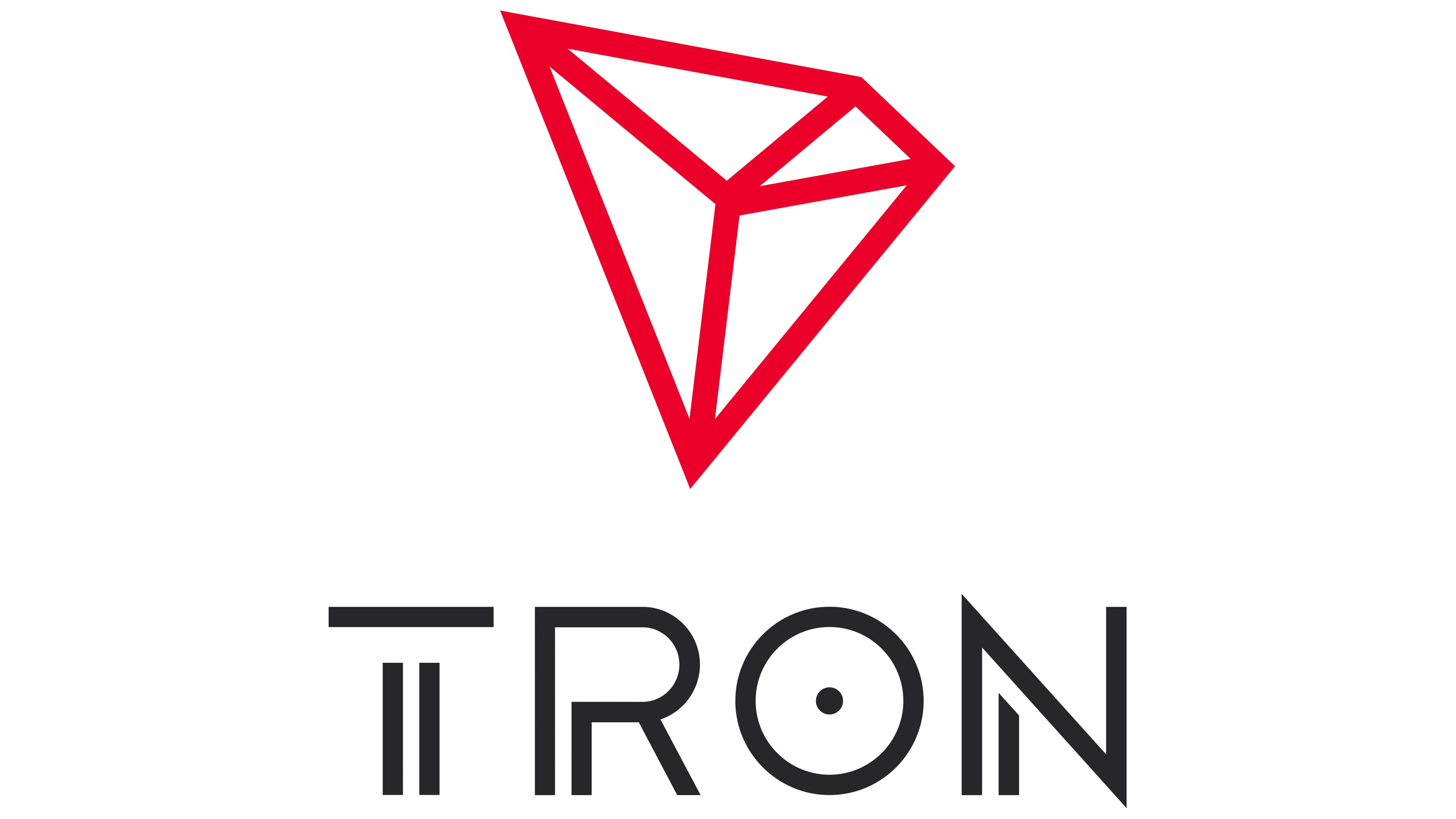
TRON is a blockchain platform that creates an ecosystem for decentralized applications and works with the cryptocurrency of the same name. The TRON logo stands out for its minimalism, clear geometric shapes, and symbolism.
The emblem’s main symbol is a red triangular crystal. Sharp angles and strict lines emphasize the platform’s manufacturability and complexity, reflecting its structure. The triangle symbolizes reliability, versatility, and a focus on decentralized solutions.
The red color enhances the project’s energy and ambition, highlighting TRON’s commitment to leadership and innovation in the blockchain industry.
The name “TRON” is designed in a geometric font for the brand. It distinguishes:
- The letter “T” has double vertical lines that convey a sense of stability.
- The letters “R” and “N” have similar double lines that add integrity to the text.
- “O” has a dot inside, reflecting the idea of decentralization and a digital ecosystem.
The font’s sharp, smooth lines create a strict, progressive image, emphasizing the platform’s technological nature.
The red triangle symbolizes the multi-layered TRON ecosystem, which includes cryptocurrency, decentralized applications, and the community. The contrast between the red graphic element and the black text enhances the expressiveness and emphasizes professionalism.
The TRON logo combines minimalism and a modern technological style. The elements reflect the platform’s ambitions and innovative approach. The symbol conveys the desire to develop a global ecosystem and simplify users’ interactions with decentralized technologies.