


 Brisk Logo PNG
The Brisk logo conveys freshness, coolness, and delight. Its refined beauty evokes pleasant memories of delicious, refreshing drinks. It seems incredible how one word can encapsulate the company’s philosophy and the charm of its products. The logo creators had to put in a lot of effort to achieve this.
Brisk traces its history to 1965, when the tea producer Lipton entered the ready-to-drink tea market. The brand was launched as an iced tea line for a growing soft drink segment, first offering a lemon-flavored version in glass bottles. At the time, it was positioned mainly for adults as a chilled alternative to carbonated drinks.
In the 1970s, Brisk expanded beyond its original lemon tea to include peach and raspberry varieties, giving the brand a broader presence in the beverage market. During the 1980s, television advertising became a major part of its growth, presenting the drink as a cold, refreshing option for active consumers.
A major shift came in 1991, when the brand joined the partnership between Unilever and PepsiCo. The deal gave Brisk stronger marketing and distribution support. In 1996, the brand launched a well-known advertising campaign built around animated pop-culture characters, helping it reach younger buyers and gain a sharper public image.
Through the 2000s and 2010s, Brisk added larger bottles, cans, limited flavors, and entertainment tie-ins. A 2010 rebrand changed the logo, packaging, and youth-focused marketing. Brisk Bodega followed in 2012, inviting fans to work with packaging design and street art. The brand marked its 50th anniversary in 2015 with retro products, then released X-Men: Apocalypse packaging in 2016, Zero Sugar in 2017, Marvel Studios’ Black Panther “Cans of Steel” campaign in 2018, new fruit combinations in 2019, Dragon Paradise Sparkling Iced Tea in 2021, a video game campaign in 2022, and broader social media activity in 2023.
Meaning and History
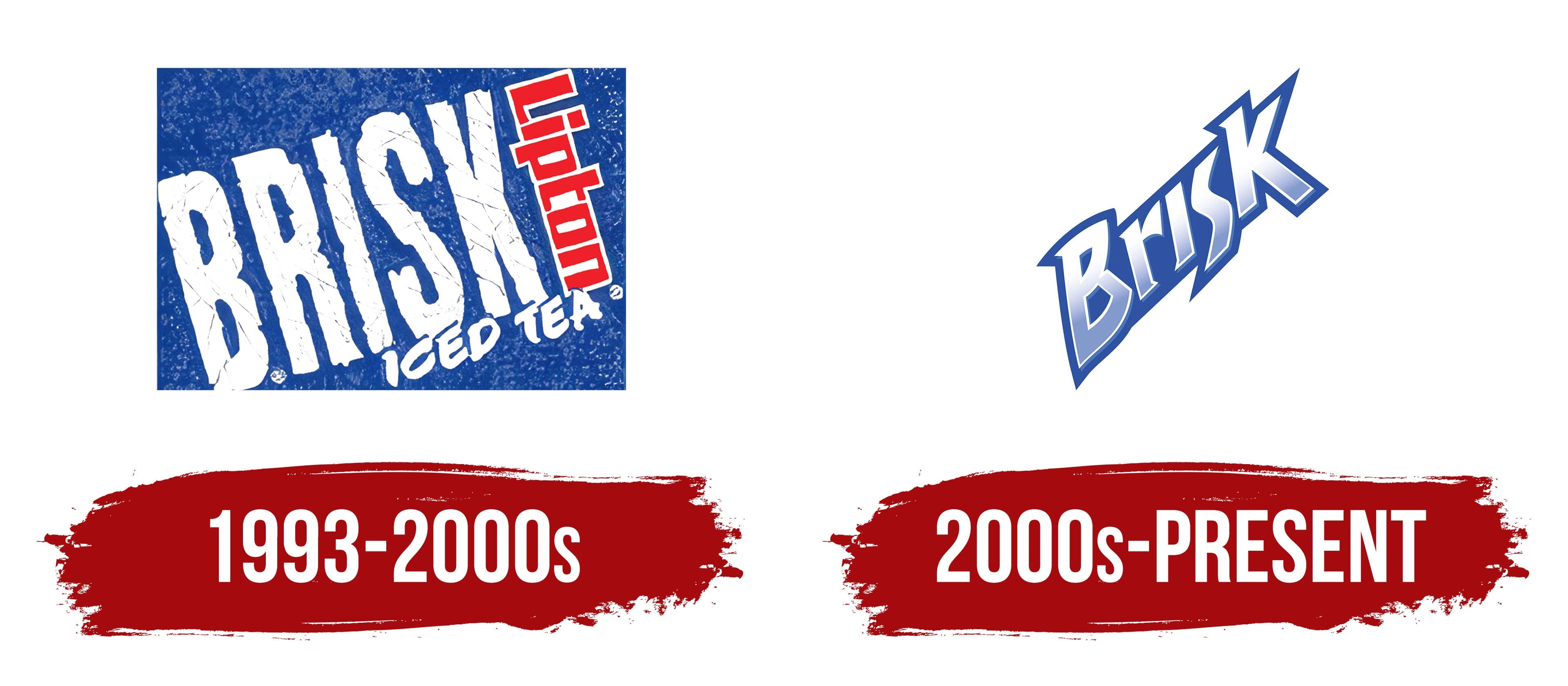
Choosing colors and fonts that would appeal to modern youth while retaining the older target audience was crucial. The lettering was graceful and bright, with a noticeable element of dynamism.
Blue, reminiscent of ocean waves, emphasized the products’ high quality, natural flavors, and originality. The brand name, rising upwards, symbolized the company’s reliability and high authority.
The brand always highlighted its remarkable qualities by offering refreshing drinks and original tea. The products were well-received by a wide audience in America and Canada, boosting demand. It is worth noting that PepsiCo and Unilever established the Lipton brand, reinforcing trust. Anyone who saw the shining light-blue Brisk logo instantly wanted to buy this drink.
What is Brisk?
It is a beverage brand created by a joint venture between PepsiCo and Unilever. The brand specializes in ready-to-drink iced tea and juice products, known for their bright flavors and attractive packaging. It targets a youthful audience through vibrant marketing and a wide range of flavors, including lemon iced tea, raspberry iced tea, and lemonade. With two industry giants working together, the brand benefits from a wide distribution network and marketing expertise, making its products available in supermarkets, convenience stores, and online retailers. The brand’s focus on quality and taste has made it a popular choice for refreshing, flavorful beverages.
1993 – 2000s
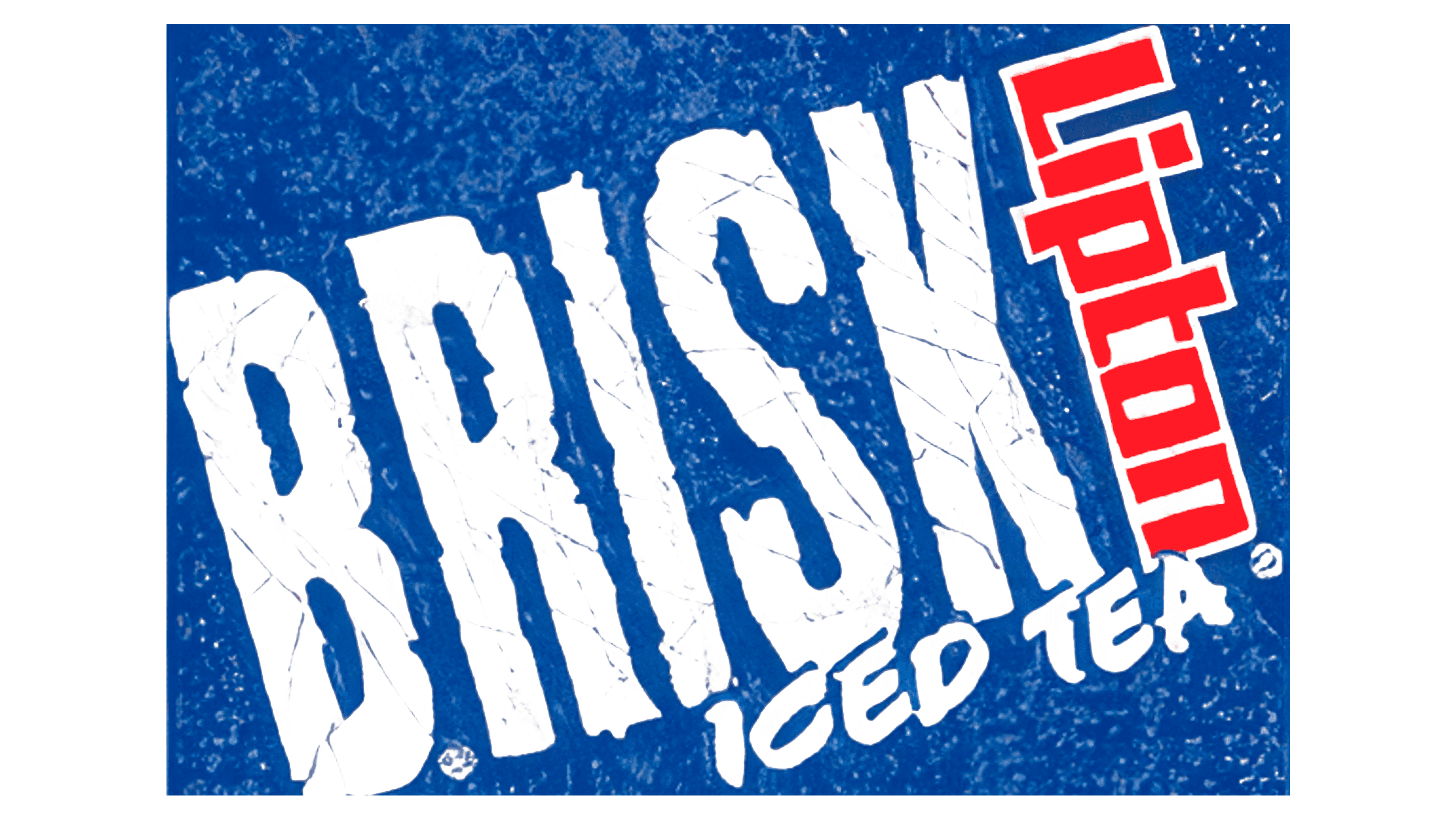
The first logo was informative and clear, but somewhat overloaded with details, as it needed to inform customers about new products; the key points were highlighted in the identity.
Brisk’s brand name was written in white capital letters on a blue background. It occupied a central position, slightly shifted to the left, making room for the word Lipton. This arrangement emphasized the unity of perspectives, customer orientation, and the main goal: creating a delicious treat for beloved customers through joint efforts.
The word Lipton was written in red, standing out not only by its color but also by the shape of the letters. Merging in one area, the two words flowed into each other, creating an interesting and presentable combination that symbolized strength and reliability.
A detailed hint, consisting of the words “iced tea,” indicated the product’s originality. Initially, the manufacturer delighted customers with its variety of flavors and their uniqueness. The marketing campaigns for each new product were very effective.
2000s – today
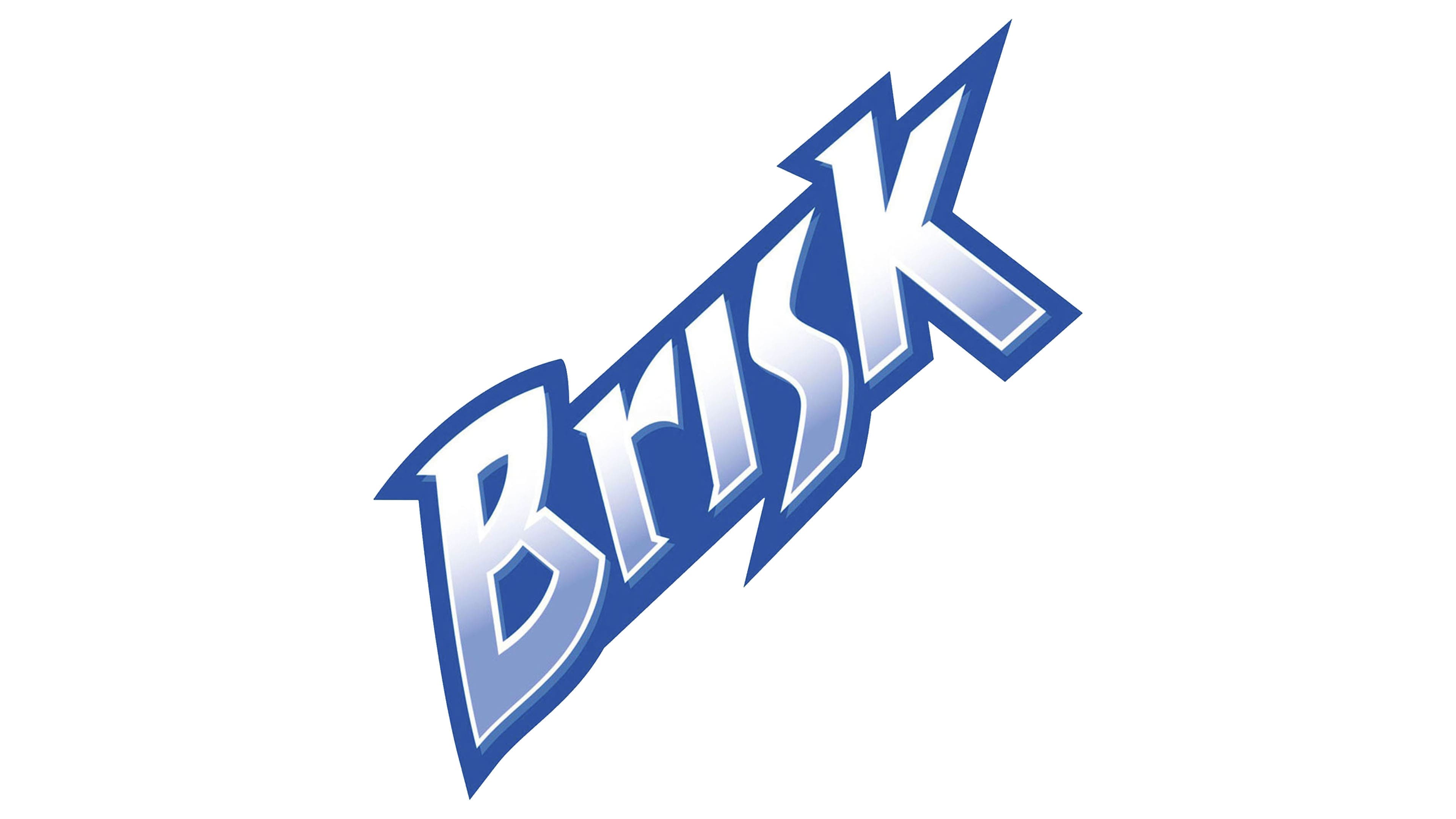
The new era shapes changing perspectives and consumer demands. The priorities of all generations shift slightly, necessitating an identity transformation. In this new phase, various industries evolve to align with contemporary style and fashion trends. Like a snake shedding its skin, the Brisk logo eliminates all excess. Specificity and minimalism prevail. Color schemes, graphics, and presentation elements take center stage.
There was no longer a need to discuss product types, ingredients, and benefits. Familiar and new flavors pleased customers. Their quality, energy boost, and aroma impressed everyone. Only refinement of the brand was necessary.
The letters became expressive, using a shimmering blue-gray tone close to blue. The dark, contrasting background effectively highlighted the brand name.
Many competitors noted the logo’s remarkable dynamism. The perception of the word was unconventional. On the one hand, certain letters’ sharp angles and arrangement resembled a lightning bolt; on the other hand, they seemed to reach skyward.
The clarity and volume of the letters convey the manufacturing company’s leadership qualities, while the background contour highlights the brand’s charm.