


 Smartwater Logo PNG
Since 1996, the Smartwater logo has been associated with water quality and health benefits. The original vitamin-infused water was created with physical strength and well-being in mind. In various identity formats, words and symbols were conceptually important.
The goal of presenting the original water was to inform potential buyers about its composition. It was also crucial to permanently associate the brand name with purity, nature, and freshness. The concept proved successful: since the first emblem appeared, the water’s popularity has only grown, and there has never been a decline in sales.
Energy Brands, first known as Glacéau, was founded in New York in 1996 by J. Darius Bikoff, a former Reebok employee. Bikoff entered the bottled water market at a time when fitness culture, diet drinks, and wellness products were gaining ground in the United States.
Smartwater was launched in 1998. The product was produced by vapor distillation and then enhanced with electrolytes, including potassium, magnesium, and calcium. The method was tied to the natural water cycle, in which water evaporates, condenses, and returns in a cleaner form. Its clear bottle and restrained label helped separate it from many standard bottled waters on store shelves.
The brand first grew in New York, then moved into other large American cities. In the 2000s, Smartwater used celebrity advertising to reach a wider audience. Jennifer Aniston became the face of the product in 2007, giving the brand stronger visibility in magazines, television campaigns, and retail promotions.
In May 2007, Energy Brands was acquired by Coca-Cola for $4.1 billion. The deal gave Smartwater access to a much larger distribution network. International expansion began with the United Kingdom in 2008. Later, the line added sparkling water, flavored versions, antioxidant and alkaline variants, and Smartwater+ products with extracts and vitamins. From 2020 to 2023, the company worked on lighter bottles, recycled plastic in selected markets, and functional water lines such as Immune Support with zinc and vitamin C.
Meaning and History
What is Smartwater?
It is a premium bottled water brand owned by The Coca-Cola Company. The brand is known for its purified water, which is processed to mimic the natural hydrological cycle. The water is enriched with electrolytes, giving it a clean, crisp flavor. The product line includes Original Steam Distilled Water, Smartwater Alkaline, and Smartwater Antioxidant. The company focuses on purity and flavor, positioning itself as a quality choice for hydration. The brand has a strong presence in supermarkets, stores, and online retailers, appealing to consumers looking for refreshing water.
1996 – 2006
The identity of the SmartWater brand’s initial phase is simple and clear. The classic black-and-white colors indicate reliability and stability. Against a white background, they shine like night lights, making the text noticeable and readable. Both words are expressively written, each in its font and color tone.
The word “Smart” is highlighted and centered in the logo. The font is bold, with deep black letters. The letters are rounded and slightly tilted; all symbols are the same size and aligned horizontally. Next to it, the word “water” is written in a regular font. It is expressive and noticeable but appears light and weightless compared to the first word.
The logo’s creators put significant effort into emphasizing the quality of the water with beneficial microelements in Glaceau. They introduced a company that aims to care for Americans’ health without using a complex color scheme. The brand established the production of water that undergoes several natural cycles of transformation.
2006 – 2010
The change in identity during the new period occurred after the brand was acquired by Coca-Cola, significantly affecting the logo’s graphics and design. Although some elements remained, the innovations and additions strengthened the brand’s positioning.
The logo’s colors were chosen from a water-inspired palette, with white and blue as the foundation. White was the background in one part of the emblem and the ideal fill for the graceful lowercase letters in another. Blue was multifaceted: it formed the base of a detailed drop and highlighted the main text elements on the white background. White always remained vibrant, while the blue varied in contrast.
The focal element of the logo was the water droplet positioned on the left. It symbolizes naturalness and hydration, associating the product with relaxation and freshness. The combination of water and the word “smart” creates a symbolic tandem that is highly informative. The logo is complemented by two text elements emphasizing the water’s primary benefits.
2010 – 2019
The redesign of the third logo did not involve major changes but additions and accents. It has become larger and more expressive than the water droplets in the identities from 2006 and 2010. Its shape has become fuller and more elegant, with a sharp element pointing to the right and rising above the two letters of the second word “water.”
The inscription “Glaceau” on the right side of the logo moved to the center of the graphic droplet and acquired a light, gentle blue shade. It has become subtly connected to the word “Smart,” emphasizing the unity of elements and meanings and the high quality of the water.
The word “Smart” remained unchanged, embodying the full meaning. The letters are uppercase and arranged in a single line. The placement remained the same: the bright text is at the center of the droplet.
A notable feature appeared in the new logo. The letter “t” now adds dynamism by extending beyond the droplet’s outline. In the earlier identity, it did not cross its boundaries, making this element especially noticeable and lively.
2019 – today
The diversity of fashion and trends influenced everything around, making the brand’s identity change seem natural to many. The vibrant colors attracted attention, and the brightness sparked interest. The color scheme needed updating to align with new trends. The blue color subtly shifted to a gentle purple, and the word “water” gained new energy.
Now, the droplet looked elegant, acquiring its style and originality. The idea was to make the product stand out among competitors. The standard blue color did not highlight uniqueness, whereas the purple droplet drew attention more effectively. The two words inside the droplet were now written in white but in different fonts, creating a striking contrast.
2020 – today
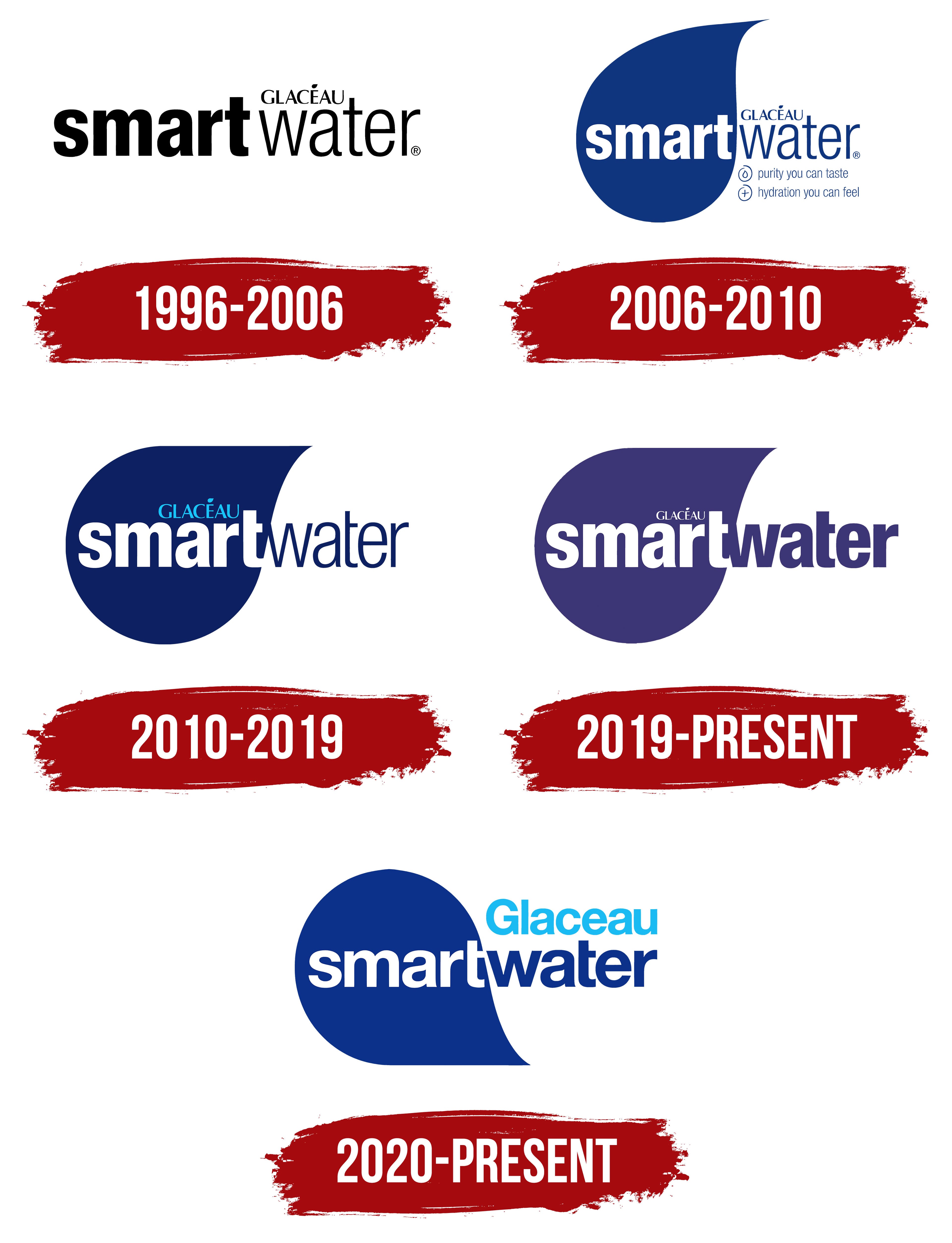
In 2020, an interesting and somewhat unconventional event occurred: alongside the existing logo, another one was introduced. Both versions of the identity can now be seen on all types of the brand’s products.
What do they have in common? The number of informational blocks is the same, and the fonts used for the word “smartwater ” are identical. However, overall, the logos have more distinctive features than similarities.
The most significant change is the droplet’s position, which is now oriented with the “tail” down. It has once again acquired a vibrant blue tone. The word “Glaceau” is written in a delicate light blue shade and placed outside the droplet, positioned above the word “water.” The “Glaceau” font has become larger and more prominent. Elements in purple tones are absent from the logo.