 Niterra Logo PNG
Automotive and industrial components include spark plugs, sensors, and ceramic parts that help machinery and equipment operate. These parts are used in transportation and industry, where precision is critical. The Niterra logo is associated with a company that manufactures components for automotive and industrial applications, including ignition systems and sensors.
Niterra Co. was founded in 1936 in Nagoya as NGK Spark Plug Co., Ltd. The company was established as a subsidiary of NGK Insulators. From the beginning, it used its ceramic expertise to produce spark plugs and aimed to reduce Japan’s dependence on imported auto parts.
During World War II, it partially redirected production to aviation needs. After 1945, the company returned to civilian production and began serving Japan’s growing automotive industry. In the 1950s and 1960s, NGK became the main supplier of spark plugs for Toyota, Nissan, and Honda.
In the 1970s, the company began expanding internationally. NGK opened factories and distribution centers in the United States, Europe, and Asia. In the 1980s, the company introduced oxygen sensors, which became mandatory in vehicles following stricter emission standards.
In the 1990s, NGK expanded its operations. The company began producing ceramic components for the electronics and semiconductor industries. In the 2000s, it developed temperature, pressure, and NOx sensors. NGK became a leading supplier of engine management systems.
Since the 2010s, the company has invested in solutions for hybrid and electric vehicles. It has developed sensors for batteries and cooling systems. In 2023, the company rebranded as Niterra Co., Ltd. The new name reflected its technological transformation.
In 2024, the transition was completed. The company retained the NGK Spark Plug brand for its auto parts product line.
Niterra is a global leader in producing spark plugs, oxygen sensors, and ceramic components. The company continues to strengthen its position in electronics and advanced transportation technologies.
Meaning and History
What is Niterra?
A Japanese corporation headquartered in Nagoya, a world leader in the production of spark plugs and engine sensors under the NGK and NTK brands. The company manufactures ignition-system components, including glow plugs and oxygen, temperature, and pressure sensors used in cars, motorcycles, and industrial equipment. It produces ceramic products for metallurgy, medicine, energy, electronics, and communications. The corporation is among the world’s top five manufacturers of auto parts and industrial ceramics.
1936 – 2023
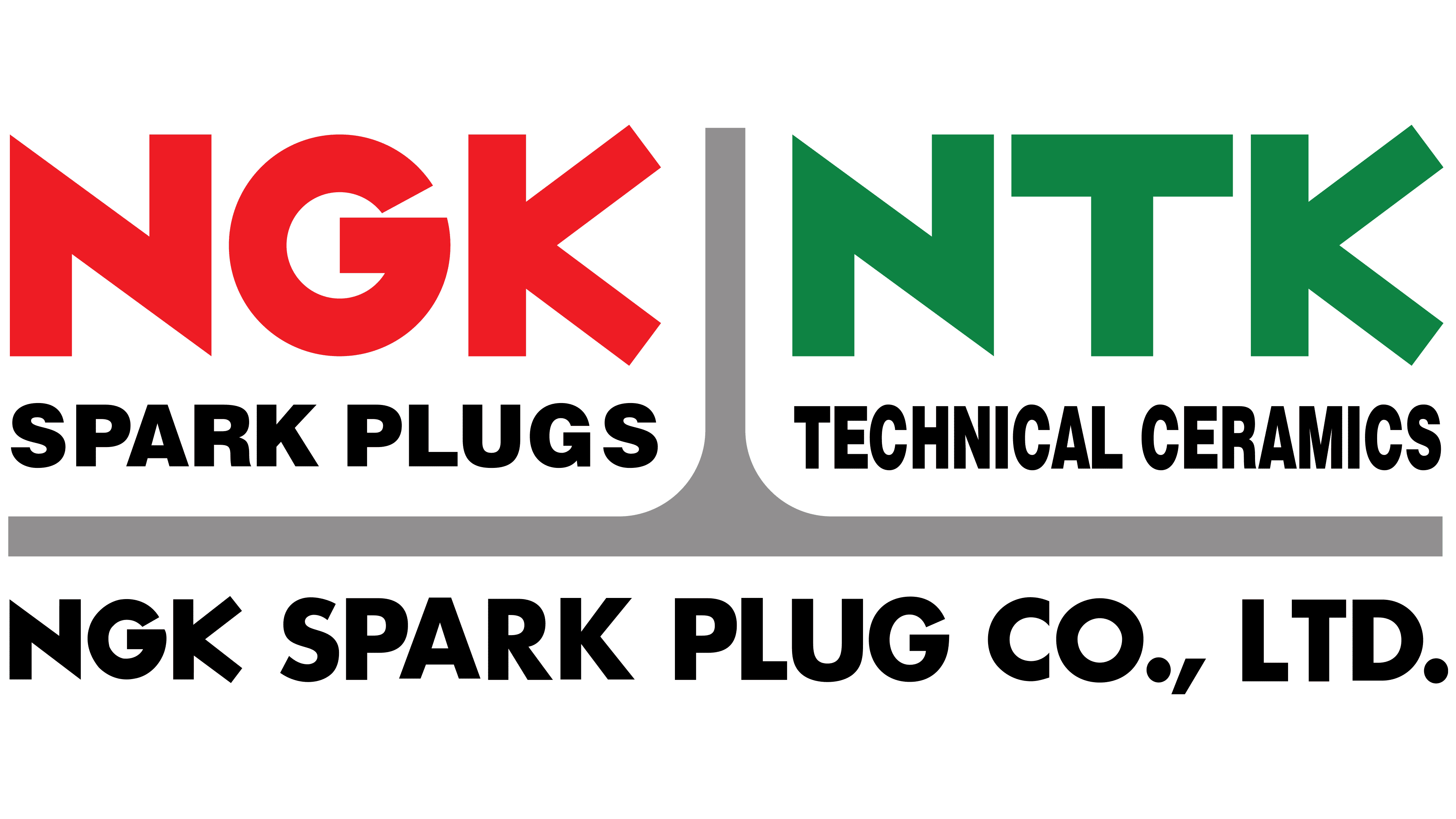
Before changing its name to Niterra, the company used 2 brands for different manufacturing businesses. The red NGK brand represented spark plugs and related products, while the green NTK brand represented technical ceramics. In the corporate logo, both abbreviations appeared above the full name NGK Spark Plug Co., Ltd. The shared wordmark reflected the business’s expansion from its beginnings as the spark plug division of NGK Insulators.
The business originated within the Morimura ceramics group. In 1921, NGK Insulators began researching spark plugs and started selling them in 1930. In October 1936, the division was spun off as a separate company, NGK Spark Plug Co., Ltd., in Nagoya. Magoemon Ezoe became its first president. In April 1937, the company began mass-producing spark plugs, drawing on the Morimura Group’s experience in porcelain and industrial ceramics. Ezoe set the goal of producing Japanese spark plugs from domestic ceramic raw materials.
The letters NGK came from the company’s former parent organization. They abbreviated Nippon Gaishi Kabushiki-gaisha, the Japanese name of NGK Insulators. The English words “Spark Plug” identified the original product. The red abbreviation became the brand for spark plugs, glow plugs, and related products.
Production under the name NTK Special Ceramics began in the spring of 1949. The name later became NTK Technical Ceramics. The company’s ceramics expertise enabled it to develop cutting tools, semiconductor packages, exhaust emissions sensors, piezoelectric products, and medical equipment. The green NTK brand represented the expanded business. Its letters echoed NGK’s angular construction, connecting the 2 brands through a shared lettering style.
In the corporate logo, the brands occupied adjacent blocks. On the left, large red “NGK” lettering appeared above the black line “SPARK PLUGS.” On the right, green “NTK” lettering was accompanied by “TECHNICAL CERAMICS.” The matching arrangement gave the 2 businesses equal space. Color distinguished them, while the abbreviations’ shared proportions suggested they belonged to the same company.
NGK and NTK used bold sans-serif lettering. Thick, uniform strokes combined with angular joins and diagonals. In the “K” of NGK, the diagonal sections extended outward from the vertical stroke. The green NTK lettering maintained the upper row’s geometry. The descriptors beneath the abbreviations were set in small black uppercase letters, retaining a heavy type style.
A gray vertical line separated the 2 blocks. At the bottom, it curved smoothly into horizontal sections that extended left and right. The curves outlined the lower inner corners of the white fields. These lines formed a boundary between the product brands above and the corporate name below. Gray distinguished the divider from the red and green abbreviations and the black lettering.
“NGK SPARK PLUG CO., LTD.” appeared beneath the horizontal line. The full company name was set in black uppercase letters and extended across the width of the design. It united both manufacturing businesses while retaining the historic spark-plug reference.
2023 – today
Renaming NGK Spark Plug to Niterra reflected the company’s expanding business. By the early 2020s, it was producing sensors, semiconductor components, technical ceramics, and medical equipment, while also working on energy technologies and communication systems. Its previous English name referred primarily to spark plugs and internal combustion engines. As the automotive industry changed, that name limited perceptions of the company’s future product range.
In 2020, the company outlined its transformation areas through the Vision 2040 program, “Beyond ceramics, eXceeding imagination,” and the long-term NITTOKU BX plan. Development was divided into 4 areas. These included mobility, healthcare, environment and energy, and communications. Bringing the businesses together required a name that encompassed the entire company.
On May 23, 2022, the board of directors announced its intention to replace the English name. Shareholders approved the change on June 24. On April 1, 2023, NGK Spark Plug Co., Ltd. became Niterra Co., Ltd., and NGK Spark Plug Group became Niterra Group. The Japanese legal name, 日本特殊陶業株式会社 (Nippon Tokushu Tōgyō Kabushiki-gaisha), remained unchanged. The corporate brand was separated from the product brands. NGK continued to represent ignition products, while NTK represented sensors and ceramic technologies.
The name Niterra combined the Latin words “niteo,” meaning “to shine,” and “terra,” meaning “earth.” The company associated it with its ambition to contribute to society and make the planet brighter. The imagery of Earth and light united different business areas within Vision 2040 and was later reflected in the logo’s colors.
After the announcement, the name was used in plain text for a time. The group and corporate logos were unveiled in January 2023, ahead of their introduction on April 1. The Japanese branding firm Bravis International developed the identity. The team prepared several options, drawing on the company’s industrial history and its vision as a next-generation business.
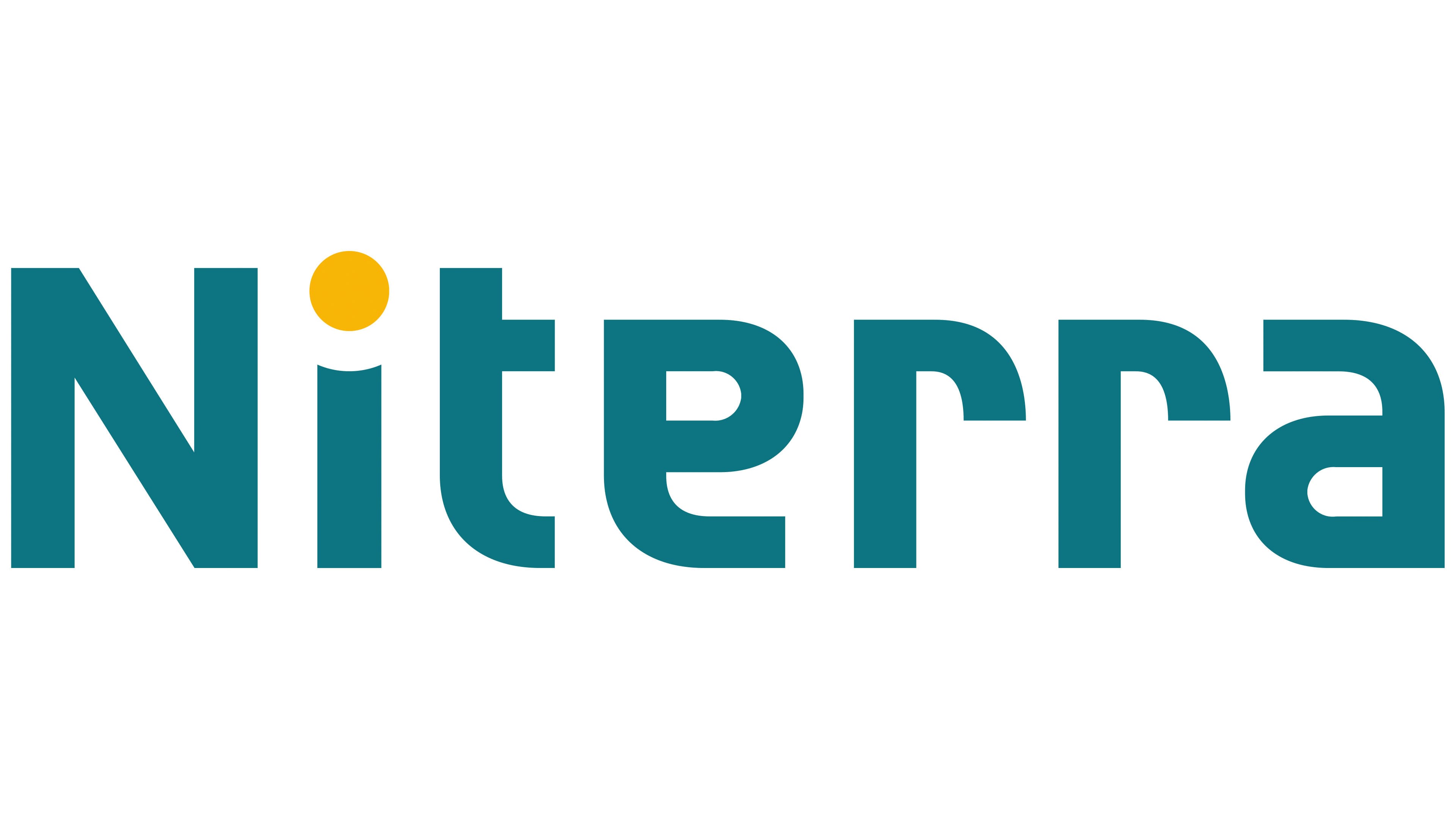
The logo centers on custom Niterra lettering. A compact wordmark replaced the multipart arrangement of NGK, NTK, dividing lines, and descriptors. Straight strokes combine with rounded sections. In the project’s interpretation, they connect accumulated manufacturing expertise with expansion into new fields.
The word begins with an uppercase “N” constructed from broad, straight strokes. The lowercase letters that follow have gentle curves and open forms. The sans-serif lettering maintains a consistent stroke weight. The angular “N” contrasts with the rounded forms in the rest of the name, while the shared stroke weight unites the letters. A round yellow dot appears above the “i.”
The primary letter color was named Earth Green. The dark greenish-blue shade reflects Earth as seen from space and conveys tradition and trust. Shine Yellow evokes a spark plug burning like a torch. The dot above the “i” conveys the meaning of “niteo” and the theme of shining. The cool letter color and warm accent replaced the previous combination of red NGK, green NTK, gray lines, and black descriptors.
Bravis prepared the Niterra group logo and a corporate version featuring the Japanese name 日本特殊陶業. The identity manuals included guidelines for combining them in Japanese and English. These described logo placement by group companies and the use of the motto “IGNITE YOUR SPIRIT.” The word “ignite” continued the ignition theme by inviting people to kindle their inner energy.
On March 6, 2023, before the new name took effect, the company released the brand film Brilliant Ideas for a Brighter Future. It connected Niterra and the yellow light accent with future business areas, including the hydrogen, circular, and space economies. On April 1, the green-and-yellow logo became the group’s corporate wordmark.