 Yum China Logo PNG
Fast food in Chinese cities is woven into the daily rhythm, from quick breaks to family dinners. The restaurants’ operations are built on cooking standards, service speed, and chain management. The Yum China logo is associated with the company that manages KFC, Pizza Hut, and other chains in China, developing them and coordinating their operations.
Yum China began in November 1987, when the first KFC restaurant opened in Beijing. It was the first major Western fast-food enterprise in the country. At that time, the brand was owned by PepsiCo, which also owned Pizza Hut and Taco Bell. In 1990, the first Pizza Hut restaurant appeared. The company started building its own logistics system and ensuring product quality control.
In 1997, PepsiCo spun off its restaurant chains into a separate company, Tricon Global Restaurants. In 2002, it was renamed Yum Brands. By that time, KFC and Pizza Hut were expanding in China, opening hundreds of new outlets every year. By 2012, the number of new restaurants reached about 900 annually. China had become Yum’s largest market.
In 2011, the company acquired the Chinese chain Little Sheep. In 2016, it separated its China business and created an independent company, Yum China Holdings. The new entity began trading on the New York Stock Exchange under the ticker YUMC. It received exclusive rights to operate the KFC, Pizza Hut, and Taco Bell brands in mainland China.
Since 2018, Yum China has been developing its own formats, including the coffee brand COFFii & JOY and a joint venture with Lavazza Group. In 2020, the company obtained a dual listing on the New York and Hong Kong stock exchanges.
In 2022, revenue amounted to $ 9.6 billion. The network included almost 13,000 restaurants. In 2023, revenue rose to $ 10.97 billion. In 2024, the figure reached a record 11.3 billion. The company opened 1,751 new restaurants. Shareholders received $ 1.5 billion in dividends and through share buybacks.
The company operates more than 16,000 restaurants in 2,400 cities across China, including 11,600 KFC and 3,700 Pizza Hut outlets. Its loyalty program covers more than 560 million users, making it the largest restaurant operator in the country.
Meaning and History
What is Yum China?
The largest restaurant operator in China manages about 9,000 locations under the Pizza Hut, Taco Bell, Little Sheep, and East Dawning brands. The company operates in more than 1,200 cities and became an independent public organization after separating from the U.S. parent company. KFC, with nearly six thousand outlets, leads the market, offering a menu adapted to local tastes. The group is expanding its Little Sheep hot pot restaurants and COFFii & JOY coffee shops.
2016 – today
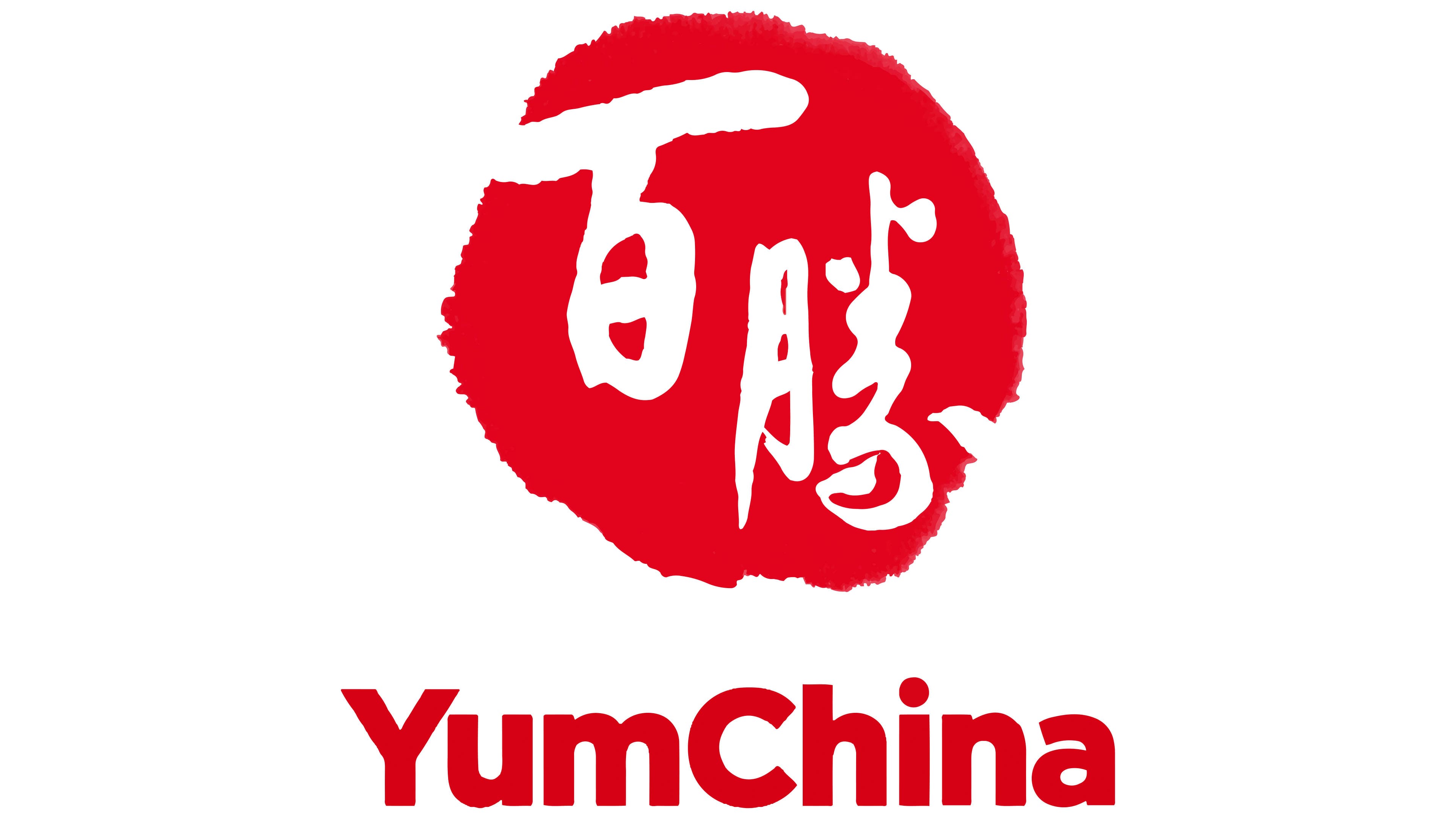
The Yum China corporate emblem appeared on November 1, 2016, following the separation of the Chinese business from Yum! Brands. The new publicly traded company received the group’s restaurants in mainland China. The separate identity was created for reports, offices, documents, publications, and digital services. KFC, Pizza Hut, Little Sheep, Huang Ji Huang, Lavazza, and Taco Bell retained the primary role in the restaurant environment. The holding company name was used mainly in business communications.
The business began in November 1987 with the opening of the first KFC in Beijing. It was the first restaurant operated by a Western fast-food chain in China. The local KFC and Pizza Hut divisions later grew into a major restaurant system and remained part of Yum! Brands for almost 30 years. Following the separation, Yum China Holdings, Inc. became independent and retained part of the former name.
The word “Yum” is used under license from Yum! Brands. It appears in the company’s official name, the yumchina.com address, and the stock ticker YUMC. Adding “China” identifies its operations in mainland China and separates the new holding company from the global group. The name preserves a familiar part of the former brand while identifying an independent Chinese company.
One version of the logo includes a large red circle containing two white Chinese characters. The lines resemble brush lettering and vary in thickness. The circle’s irregular edge resembles a seal impression or a watercolor mark. The identity combines the international Yum name with Chinese writing traditions and the business’s local origins.
The YumChina wordmark appears beneath the circle. The letters “Y” and “C” are uppercase, while the remaining letters are lowercase. The red sans-serif typeface has a heavy weight and rounded forms resembling Helvetica Rounded or a modified Gotham Rounded. The two parts are joined and form one name.
The horizontal version contains the words Yum China, presented separately from the former group’s red cloud. Yum is red, while China is gray. The different colors preserve a connection with the former group while distinguishing the Chinese business. The new framing structure separates the global company from the independent publicly traded holding company.
The holding company identity appears in financial reports, business correspondence, shareholder materials, and corporate publications. Restaurant facades display the logos of the individual chains.