


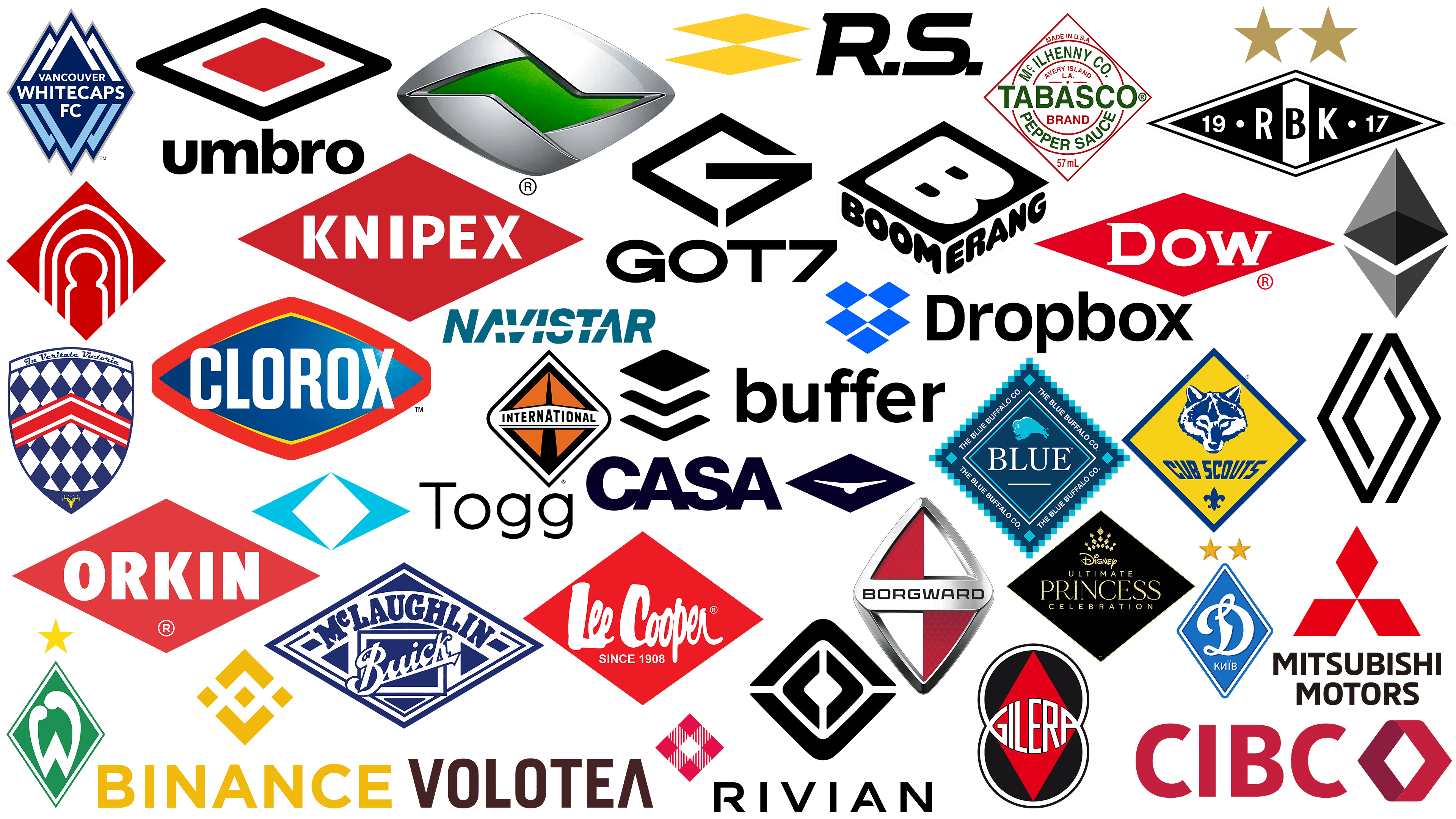
The shapes companies select for their logos become their second name and subtly influence our perception. One interesting and non-obvious shape in design is the diamond. Its four sides, set at dynamic angles, make it more expressive than a square and less predictable than a circle. If a square symbolizes reliability, a diamond represents flexibility and a desire to break from the conventional.
Since ancient times, people have associated diamonds with growth and forward movement. For example, many ancient cultures linked the diamond shape to fertility and renewal. In Native American culture, it symbolized growth and protection, signifying a lineage’s prosperity.
In modern culture, the diamond hasn’t lost its popularity. Brands that choose this shape usually communicate dynamism, growth, and adaptability in any circumstance. These could include automotive companies, fashion houses, or food and beverage producers. The diamond shape does not set clear boundaries for associations, allowing for unique and interesting concepts.
Below are examples of famous brands that incorporate the diamond in their symbols. Each brand uses the shape differently, filling it with meaning and character. See for yourself what ideas designers managed to convey and how the diamond shape is revealed in these emblems.
Werder Bremen

The logo of the German football club Werder Bremen is an expressive green diamond with a thin white outline. The green color is associated with Bremen, where the club originated and has existed for over a century. Inside the diamond is a stylized letter “W” resembling a wave, hinting at the Weser River that flows through the city and gave the club its name. The golden star on top was added after the club won the national championship, symbolizing pride in the team’s achievements and ambition for further success.
Buffer

Buffer’s logo is designed as a stack of documents, with the top segment shaped like a diamond. The lower symbols, depicted as downward-pointing arrows, imply sequence or order. The company, created to make scheduling social media posts easier, intentionally uses a stack of papers to suggest organized, structured processes. The concise black font strengthens the perception of the service’s reliability.
SSC

SSC’s heraldic shield is filled with diamonds reminiscent of a checkerboard. The emblem’s colors are rich, with strict blue alternating with white. A vivid red chevron with a narrow white border highlights the center, adding dynamism to the symbol. A miniature golden deer head is placed at the bottom. Diamonds here symbolize precision and consistency, aligning with the prestigious institution’s strict standards and spirit.
Boomerang

Boomerang’s logo has a playful shape resembling a toy cube, but it rests on a diamond base, as shown in its perspective and side inscriptions. The top of the logo features a black surface with a stylized letter “B,” and the word “BOOMERANG” positioned along the sides. The channel’s name resonates with the logo’s geometry: like a boomerang, the diamond can be viewed from multiple angles, evoking movement and playfulness. The black-and-white color scheme makes the image easy for children, the channel’s primary audience, to perceive and remember.
Cub Scouts

Cub Scouts use a bright yellow diamond with a blue border for their logo, featuring a wolf cub in the center. The wolf symbolizes endurance and team spirit, while the diamond represents scouting badges and achievement patches members earn. At the bottom is a fleur-de-lis, a traditional scouting emblem. The logo represents the organization’s purpose of uniting children and nurturing their strength and independence through play and adventure.
Dow

Dow’s emblem centers on a simple, horizontally stretched red diamond. The diamond symbolizes strength and stability, fitting an international chemical corporation that produces materials for construction and industry. The brand name is written in bold white letters with neat serifs, emphasizing corporate reliability and the company’s longstanding reputation dating back to the late 19th century.
Binance

The Binance logo features a gold diamond segmented into smaller parts, with slight gaps between the lines. Inside the figure are small details resembling interwoven chains, associated with the company’s primary specialization, cryptocurrencies and blockchain technologies. The yellow color symbolizes prosperity, financial stability, and a digital future. The font’s clean forms lend the image a sense of reliability, suggesting transparency in the platform’s processes.
Knipex

The Knipex logo is executed in a single color: a bright red diamond with white lettering. As a tool manufacturer, the company chose the diamond to symbolize the quality, durability, and precision professionals worldwide value. Simple lines and minimal detail communicate a brand’s reliability with a history spanning over a century. The horizontally stretched shape adds stability to the image, fitting well within the company’s industry.
Renault Sport

The Renault Sport emblem consists of two elongated, horizontally positioned diamonds in saturated yellow that touch at a central point. The shapes’ positioning creates a dynamic illusion of acceleration, reflecting the racing character of a division specializing in sports cars and motorsports. The adjacent inscription “R.S.” is set in an italicized, sans-serif font, reinforcing the brand’s sporty character and its connection to motion and speed, key aspects of the division’s activity.
Ethereum

The Ethereum logo resembles a precious crystal from a sci-fi film: a vertically elongated diamond shape divided by a thin line of space into two separate figures. The upper part symbolizes digital wealth and virtual value inherent in cryptocurrencies, while the lower part adds balance and harmony, hinting at the platform’s stability. The black-and-gray palette and strict lines convey the project’s technological, innovative nature and its leadership in the blockchain world.
McLaughlin

The McLaughlin emblem features a complex pattern within a diamond-shaped frame, reminiscent of early 20th-century vintage automotive badges. The blue palette symbolizes the reliability of the company’s vehicles, which are part of the Buick brand. A rectangle within the diamond contains the slanted inscription “Buick,” emphasizing the brand connection. The logo reflects the traditions and classic heritage of automobile manufacturing, which brand enthusiasts appreciate.
Gilera

The Gilera emblem conveys a retro spirit: a central red diamond enclosed within two black rings evokes speed and passion for motorsports. The Italian company, with a longstanding motorcycle-manufacturing tradition, emphasizes the diamond’s connection to movement, balance, and the thrill racers experience on the track. The brand name sits along a curve at the center, reinforcing the dynamic composition and ensuring logo recognition.
Disney Princess

The Disney Princess logo looks luxurious due to the contrast between a dark diamond and golden elements. The coat-of-arms shape is complemented by a sparkling crown made of small diamonds, emphasizing the status of princesses in the Disney universe. The strict geometric background symbolizes elegance and the fairy-tale traditions the brand has cultivated since its inception. The signature Disney font adds gracefulness to the inscription, evoking the magic and charm of its famous characters.
Navistar

The Navistar emblem is recognizable for its bright orange diamond, divided by black lines into four compass-like sectors that symbolize direction and orientation. The brand is known for trucks and engines, and its logo conveys the reliability and precision essential to commercial transportation. The inscription “International” at the diamond’s center reflects the company’s global ambitions and highlights its leadership in the heavy machinery and heavy-truck segments.
UCLM

The UCLM logo features a red diamond with white lines forming a stylized depiction of doorways, with a person’s silhouette at the center. The symbol carries deep meaning and invites interpretation. It can represent the educational process, symbolizing the journey toward knowledge and the unlocking of human potential. The lack of text heightens the graphic’s mystery and appeal.
Togg

Togg’s emblem is minimalist: two bright blue diamond segments point in opposite directions and surround a central void, creating a transparent diamond. The symbol reflects the company’s commitment to innovation and the future of automotive manufacturing. The geometric emblem is accompanied by a reserved name in a lightweight black font. The color emphasizes the brand’s ecological focus and fresh approach to the industry.
Lee Cooper

Lee Cooper’s red diamond serves as a background for a free-flowing, nearly handwritten white inscription that reflects the British denim brand’s style and spirit. The brand emerged in London in 1908, and the diamond, resembling a quality stamp, symbolizes the durability and freedom comfortable clothing provides. Over its more than a century-long history, the logo has evolved, but the diamond has remained unchanged.
Mitsubishi

The Mitsubishi logo consists of three diamonds joined at the center. The brand name translates to “three diamonds,” so the founders chose this shape. The color red symbolizes the confidence and dynamism inherent in cars and technology. The figure combines simplicity and style, highlighting the brand’s Japanese origin and pursuit of precision in every detail.
Rosenborg

Football club Rosenborg chose an elongated horizontal diamond for its emblem, executed in a classic black-and-white color scheme. The strict shape and central vertical stripe symbolize the team’s strength and determination. The letters “RBK” in the center and the club’s founding date (1917) inscribed on the sides reflect the tradition and history of one of Norway’s oldest and most successful football clubs. Two golden stars above the emblem mark the team’s numerous national championship victories.
Orkin

Orkin’s logo features a striking diamond. The red color hints at danger, which the pest-control company fights. The geometric shape resembles a warning sign, and the white letters contrast with it, strengthening the sense of reliability and protection. The company, which has operated for over a hundred years, chose an emblem that emphasizes its fight against unwelcome guests.
Ranz

The logo of the Chinese brand Ranz uses a futuristic diamond with a steel shine and a bright green accent inside. The green color symbolizes the eco-friendliness of the company’s vehicles, specifically those from the FAW-Toyota division, which focuses on electric vehicles. The metallic diamond conveys technological sophistication and the brand’s reliability, creating new-generation cars aligned with modern innovation and environmental care ideas.
Dinamo Kyiv

Dynamo Kyiv’s emblem is an elongated blue diamond with a double white outline. The diamond shape is a classic choice for sports clubs, reminiscent of sports awards and badges of honor. The cursive letter “D” at its center has become the club’s signature. Above the diamond, two golden stars symbolize landmark championship victories. The symbolism emphasizes Dynamo Kyiv’s status and achievements over the decades.
Blue Buffalo

The Blue Buffalo emblem resembles an unusual postage stamp featuring a dark turquoise diamond framed by a lighter turquoise border. Miniature diamonds repeat the main geometry along the perimeter. Inside, the word “BLUE” appears prominently, topped by a bright turquoise buffalo running forward, symbolizing strength and natural energy. The diamond is symbolic: it signifies quality and guarantees the brand’s pet products are made with natural ingredients.
CIBC

CIBC’s emblem features an unusual diamond: it appears folded from a wide burgundy ribbon, creating the illusion of a three-dimensional figure. The symbol seems slightly rotated, offering viewers a dynamic angle. The bank chose this shape to highlight the openness and reliability of its services while conveying stability and security. Simple burgundy letters complement the design without distracting from the main symbol.
Vancouver Whitecaps

The Vancouver Whitecaps’ emblem is closely tied to British Columbia’s natural landscape. The main figure is a multi-layered diamond visually resembling the snowy mountain peaks surrounding Vancouver. The colors dark blue, sky blue, and white capture the atmosphere of winter mountains and snowy summits. The club’s name appears in white letters at the center against a dark blue background. The diamond symbol highlights the local geography and the club’s proximity to Canada’s majestic nature.
Volotea

The Spanish airline Volotea chose a diamond to symbolize easy flight and movement toward new destinations. The brand’s emblem features an airy red-and-white diamond with a checkerboard pattern, stylized to look as if it were assembled from small ribbons. The word “Volotea,” set in a large, modern sans-serif font, appears to the left, completing the image. The diamond symbolizes route diversity, intersecting paths, and the company’s aspiration to explore new corners of the world.
CASA

The Spanish aircraft manufacturer CASA reflects simplicity and technological sophistication in its logo. A minimalist bird in flight complements a deep, dark-colored diamond. It symbolizes freedom, reliability, and the high-quality aircraft the company has produced since the early 20th century. The strict font emphasizes the company’s industrial character and reputation as a leader in Spain’s and Europe’s aerospace industries.
Dropbox

Dropbox uses diamonds in its logo to form a stylized open box. They have become symbols of the service’s main function, file storage and transfer. The composition comprises five blue and one white diamond, creating an open space inside the box. The shape emphasizes the service’s simplicity and convenience, as the diamonds are arranged neatly and easily, analogous to the simple, convenient handling of digital documents.
Rivian

The emblem of the American electric-vehicle brand Rivian consists of a stylized diamond made of four distinct parts. The shape resembles a compass, symbolizing the company’s pursuit of new territories and technologies in electromobility and sustainability. Smooth lines, gentle curves, and no sharp angles create a sense of safety and comfort, aligning with the company’s mission to produce innovative vehicles for adventures in both natural and urban environments.
Borgward

The Borgward emblem looks prestigious and vintage, reminiscent of classic automotive badges from the past century. A diamond with convex sides is divided by a horizontal silver stripe bearing the brand’s name in the center. This evokes a car radiator grille, an automotive design element. Red and white diagonal segments emphasize the brand’s heritage and hint at its German roots. The diamond symbolizes balance and harmony, which the company strives to maintain between tradition and innovation in car manufacturing.
Tabasco

The diamond in Tabasco’s logo resembles an old-fashioned bottle label. Its deep red outline frames the brand’s signature inscription, rendered in dark green lettering. Inside the shape are the manufacturer’s semi-circular name and the sauce’s place of origin, the legendary Avery Island. The composition looks authentic, and the diamond shape adds graphic rigor, reflecting the long-standing tradition of producing the famous pepper sauce.
Umbro

The iconic symbol of the British brand Umbro centers on a dynamic diamond shape that reflects the brand’s sporty nature. The central red diamond, reminiscent of a football pitch, is enclosed within a strict double black outline. Below the emblem, a simple lowercase inscription symbolizes Umbro’s confidence and directness. The diamond shape reflects the playing field, emphasizing tradition and strength and highlighting the brand’s connection to football, where it initially established itself.
Clorox

The energetic diamond in the Clorox logo resembles an elongated shield with a red outline, underlined by a thin yellow line. The blue background supports the main inscription highlighted in large white letters. The shield shape is symbolic, as the brand specializes in household chemicals known for protective qualities. The color scheme and shape suggest cleanliness and product effectiveness.
Renault

Renault’s updated logo features two thin, interwoven outlines that form an elegant diamond, with visual gaps at the intersections. The geometric shape conveys balance and reliability, essential attributes of the automotive brand with more than a century-long history. Known among brand enthusiasts as the “Renault diamond,” it first appeared in 1925 and symbolizes the quality and durability of the company’s vehicles. The modern version emphasizes minimalism and the brand’s technological nature.
GOT7

The GOT7 logo centers on a stylized letter “G,” drawn as a diamond with an open contour. The K-pop group chose this geometric shape to convey strength and team unity, reflecting their performances and the members’ friendship. The black color highlights the artists’ serious approach to their work, while the diamond shape adds lightness and memorability to the logo. The modern font of the group’s name, placed beneath the symbol, complements the overall style.
Conclusion
The diamond in logo design is no longer a random geometric shape. Many companies use it, from automotive giants and sports clubs to tech startups and clothing manufacturers. Despite its simple form, a diamond can express speed, ambition, and the pursuit of new horizons. By choosing this shape, designers can convey a great deal without unnecessary words, balancing strictness and expressiveness. Although the diamond seems like a clear symbol, it reveals itself differently each time, keeping diamond logos relevant over the years.